Elle Decoration | Mexico
DATE
June 2024
LOCATION
Mexico
Mid-Century Style in the Digital Age
Written by Camilla Wagstaff
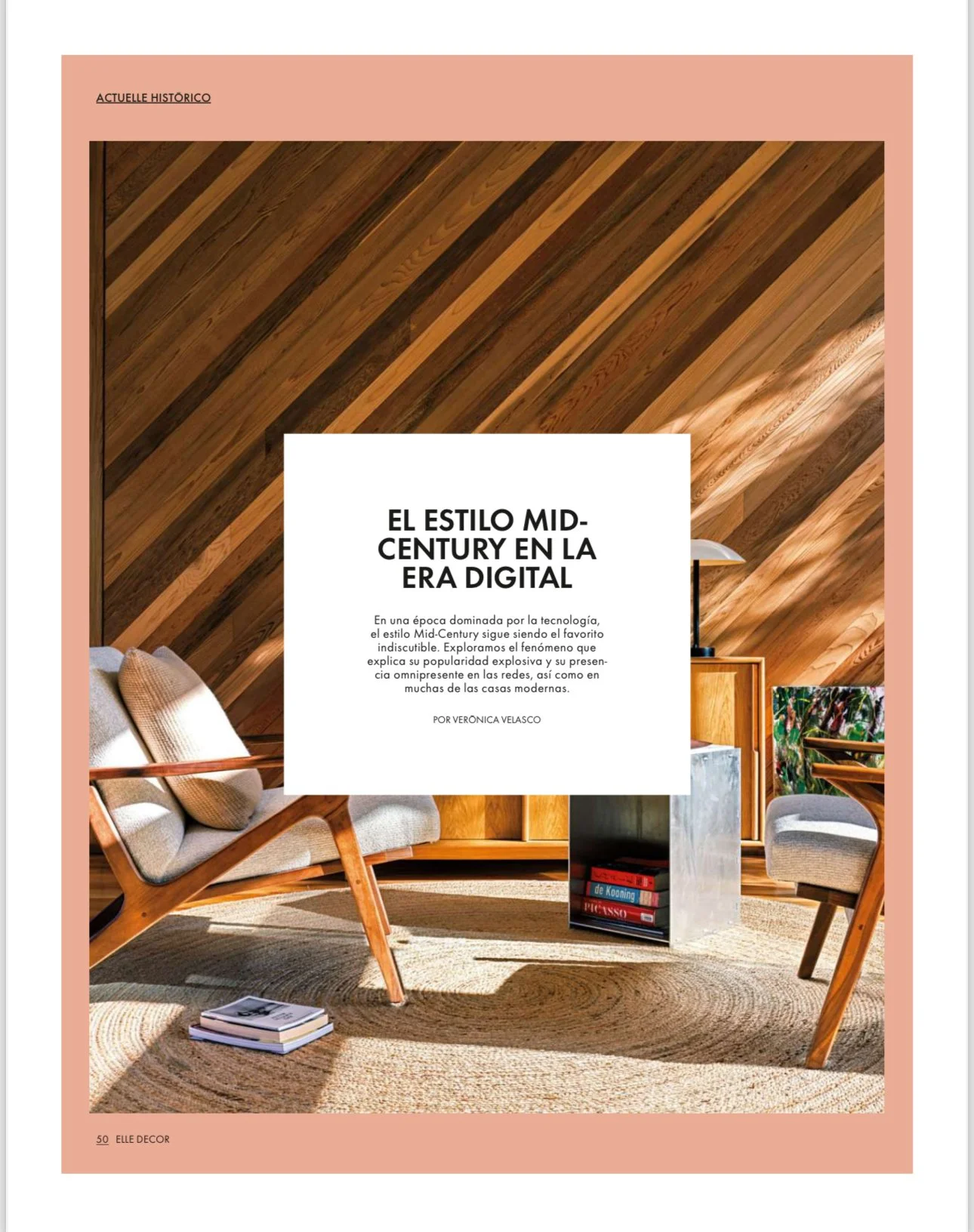
(Translated) In an era dominated by technology, midcentury style remains the undisputed favorite. We explore the phenomenon that explains its explosive popularity and its ubiquitous presence on social media, as well as...
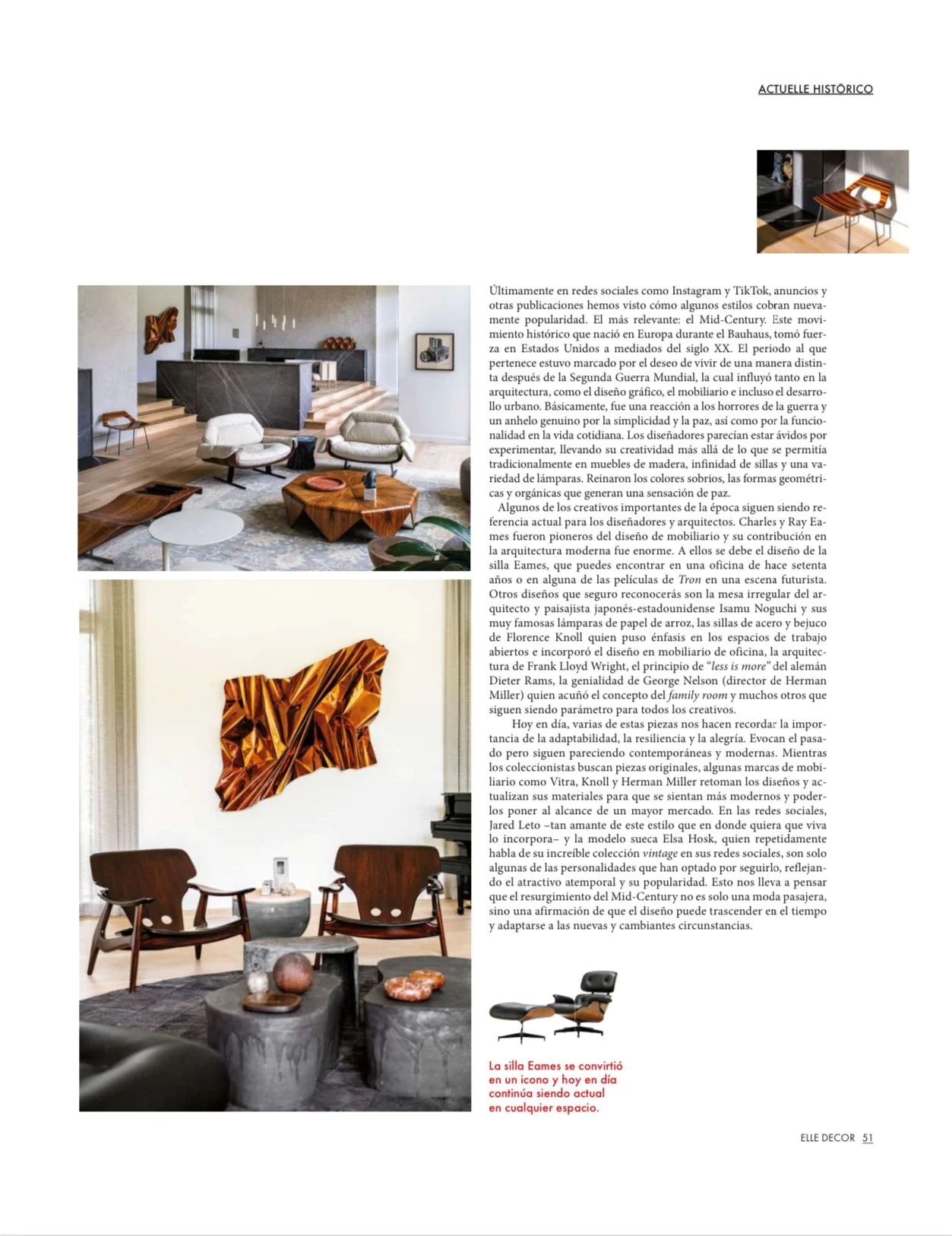
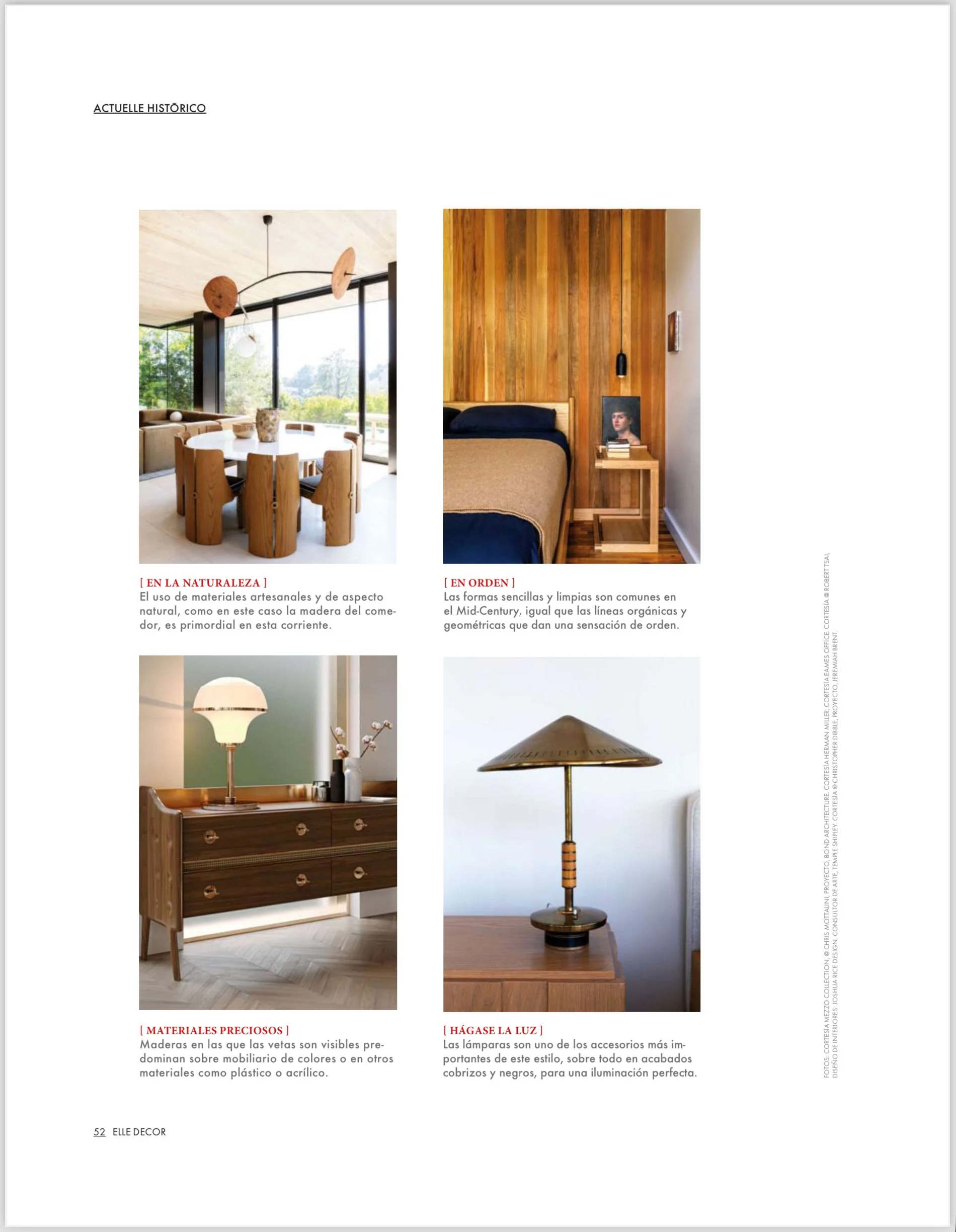
Lately, on social media platforms like Instagram and TikTok, in advertisements and other publications, we've seen how certain styles are regaining popularity. The most relevant: Mid-Century Modern. This historical movement, which originated in Europe during the Bauhaus period, gained momentum in the United States in the mid-20th century. The period to which it belongs was marked by a desire to live in a different way after World War II, which influenced architecture, graphic design, furniture, and even urban development. Basically, it was a reaction to the horrors of war and a genuine longing for simplicity and peace, as well as for functionality in everyday life. Designers seemed eager to experiment, pushing their creativity beyond what was traditionally allowed in wooden furniture, countless chairs, and a variety of lamps.
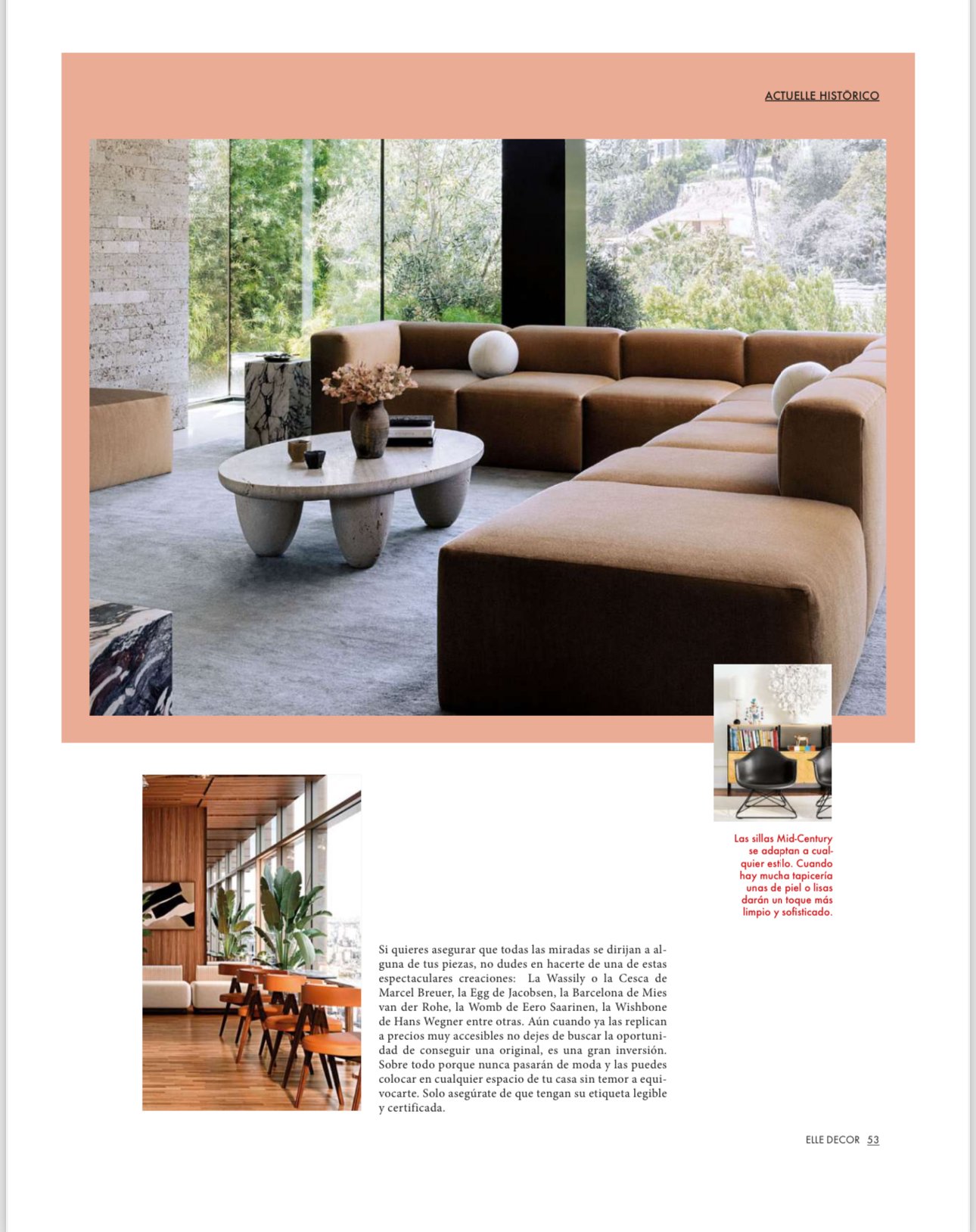
Sober colors, geometric and organic shapes that generate a sense of peace reigned supreme. Some of the important creatives of the time remain a current reference for designers and architects. Charles and Ray Eames were pioneers of furniture design, and their contribution to modern architecture was enormous. They are credited with the design of the Eames chair, which you can find in an office from seventy years ago or in one of the Tron movies in a futuristic scene. Other designs you're sure to recognize are the irregular table by the Japanese-American architect and landscape designer Isamu Noguchi and his very famous rice paper lamps, the steel and rattan chairs by Florence Knoll, who emphasized open workspaces and incorporated design into office furniture, the architecture of Frank Lloyd Wright, the "less is more" principle of the German Dieter Rams, the genius of George Nelson (director of Herman Miller) who coined the concept of the family room, and many others who continue to be a benchmark for all creatives.
Today, several of these pieces remind us of the importance of adaptability, resilience, and joy. They evoke the past but still manage to look contemporary and modern. While collectors seek out original pieces, some furniture brands like Vitra, Knoll, and Herman Miller are reviving the designs and updating their materials to give them a more modern feel and make them accessible to a wider market. On social media, Jared Leto – so fond of this style that he incorporates it wherever he lives – and the Swedish model Elsa Hosk, who repeatedly talks about her incredible vintage collection on her social media, are just a few of the personalities who have embraced it, reflecting its timeless appeal and popularity. This leads us to believe that the resurgence of Mid-Century design is not just a passing trend, but an affirmation that design can transcend time and adapt to new and changing circumstances.
Photography: Robert Tsai, Pages: 50-53