ModCiti Dallas | JRD Profile
DATE
February 2020
LOCATION
Dallas, USA
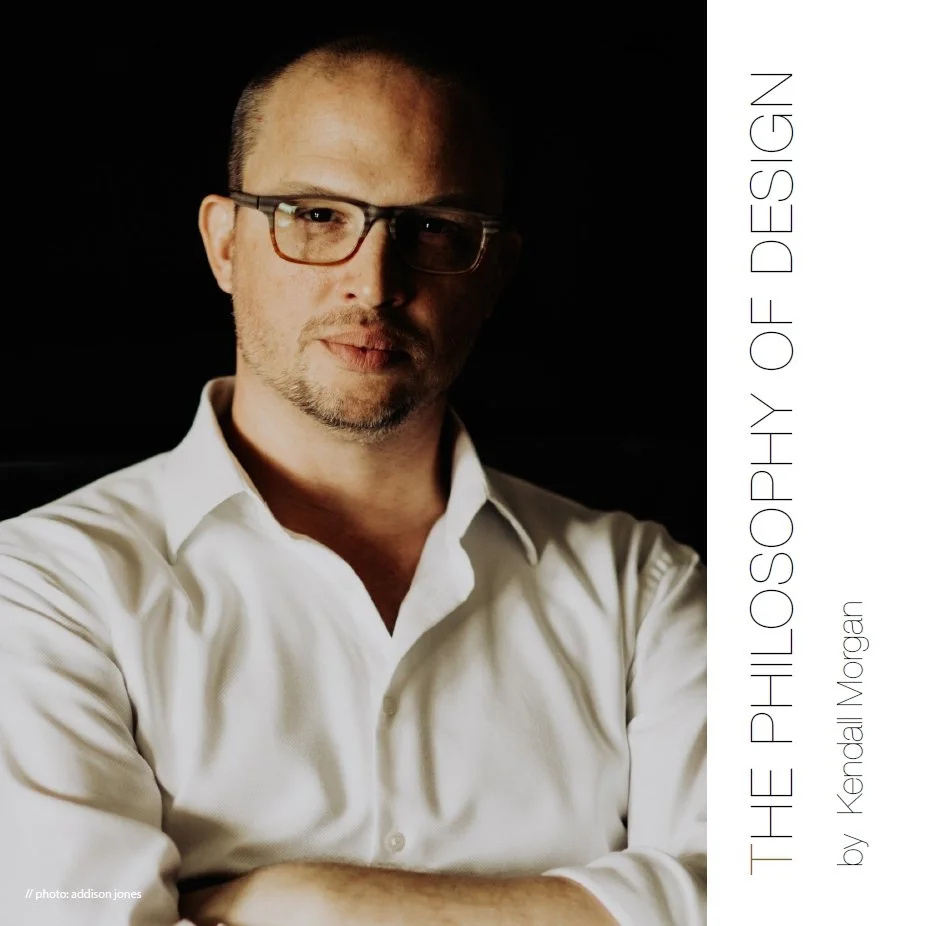
The Philosophy of Design
Written by Kendall Morgan
What makes a house a (well-curated) home, courtesy of interior designer Joshua Rice.
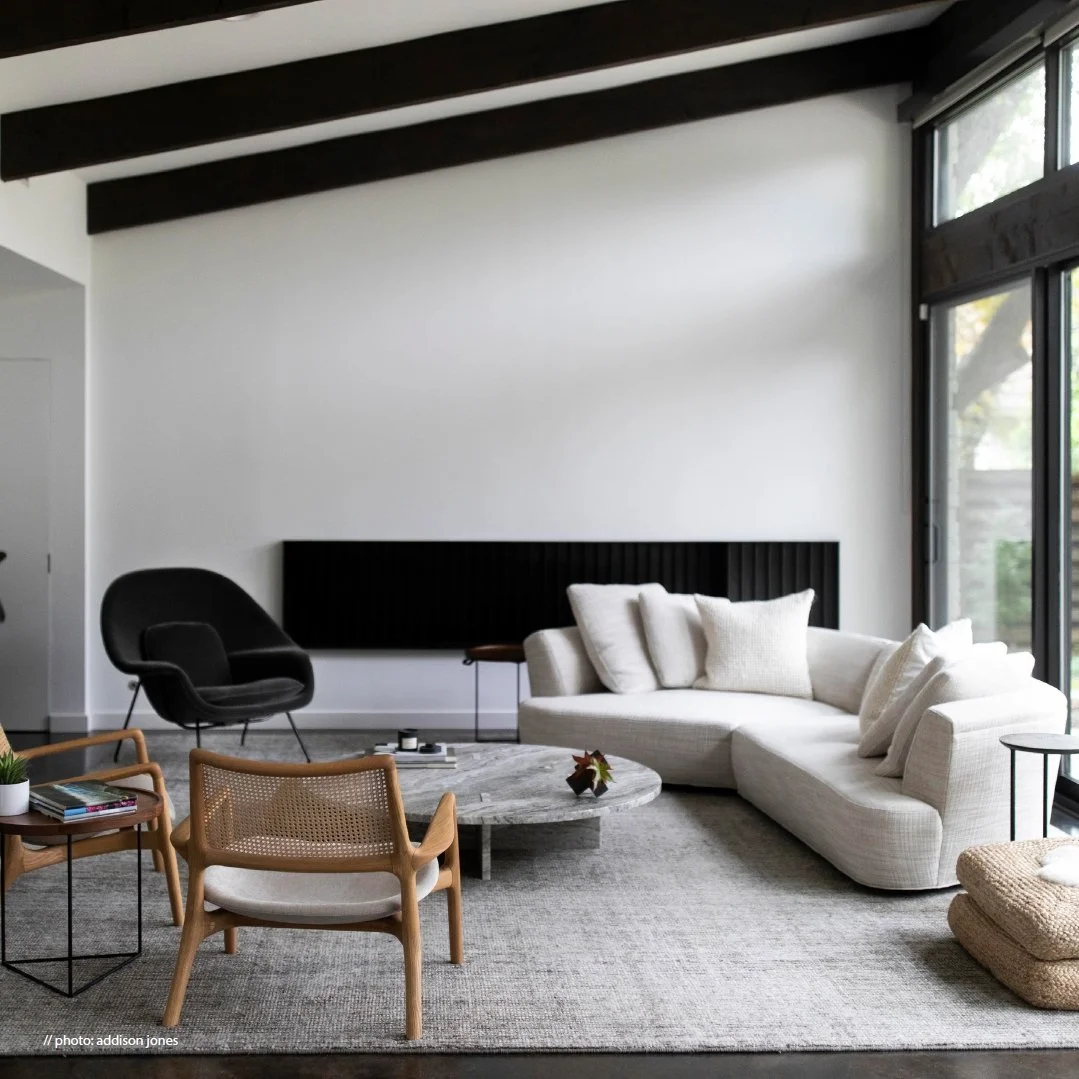
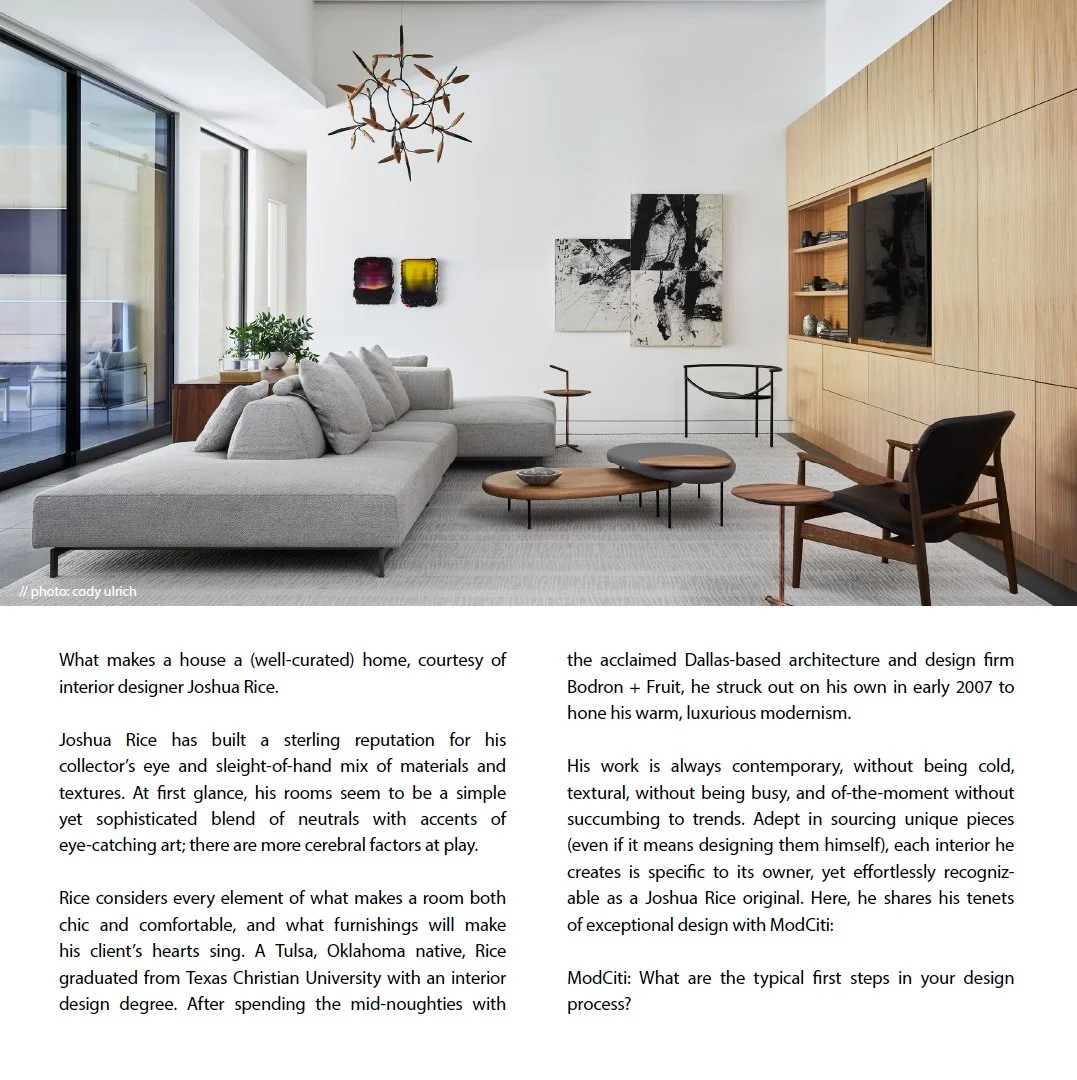
Joshua Rice has built a sterling reputation for his collector's eye and sleight-of-hand mix of materials and textures. At first glance, his rooms seem to be a simple yet sophisticated blend of neutrals with accents of eye-catching art; there are more cerebral factors at play.
Rice considers every element of what makes a room both chic and comfortable, and what furnishings will make his client's hearts sing. A Tulsa, Oklahoma native, Rice graduated from Texas Christian University with an interior design degree. After spending the mid-noughties with the acclaimed Dallas-based architecture and design firm Bodron + Fruit, he struck out on his own in early 2007 to hone his warm, luxurious modernism. His work is always contemporary, without being cold, textural, without being busy, and of-the-moment without succumbing to trends. Adept in sourcing unique pieces (even if it means designing them himself, each interior he creates is specific to its owner, yet effortlessly recognizable as a Joshua Rice original. Here, he shares his tenets of exceptional design with ModCiti:
ModCiti: What are the typical first steps in your design process?
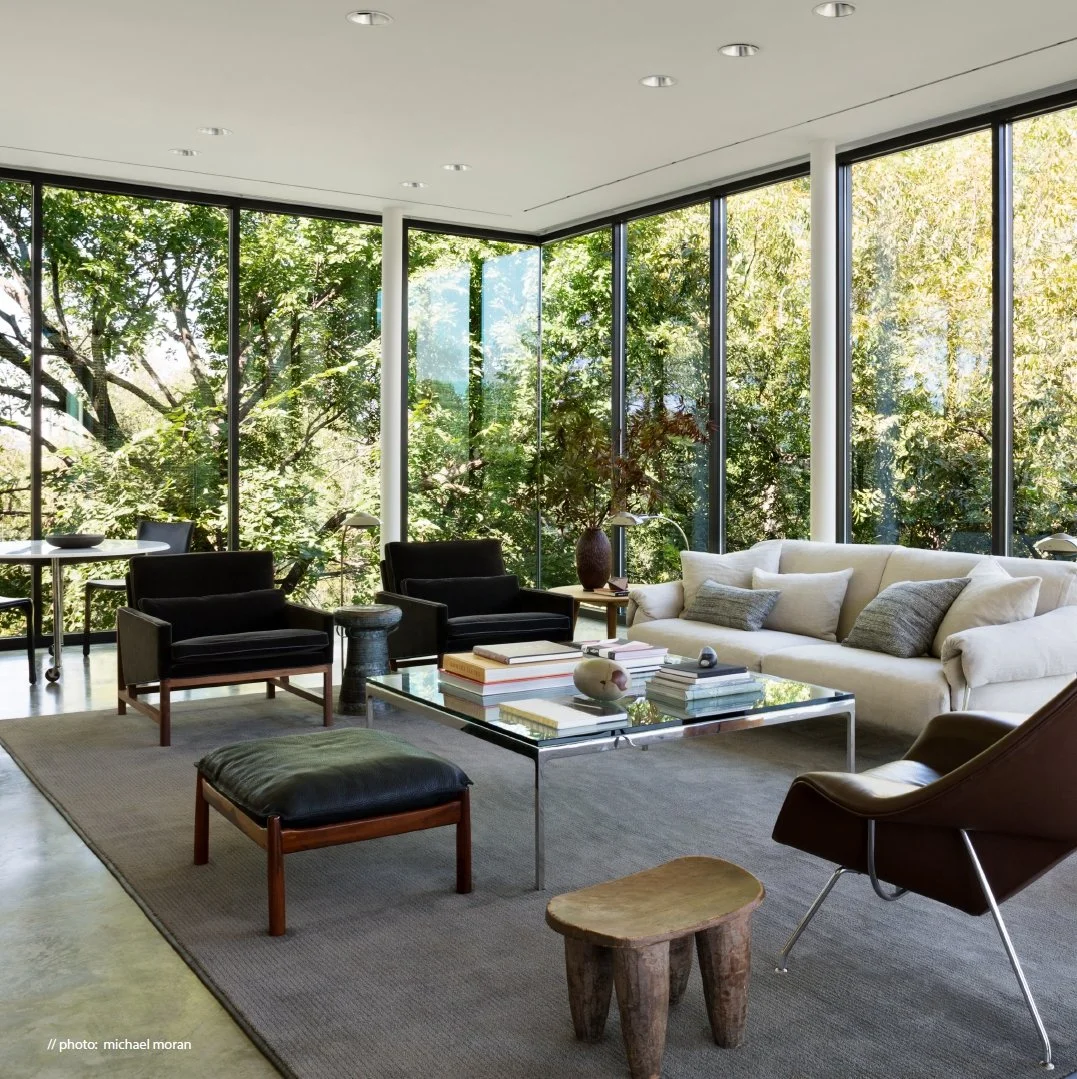
Joshua Rice: I spend a tremendous amount of time studying the architecture and the primary architectural intent for the space. want to compliment the original architect's design, not overtake it, so we can be proud of the finished space. I've been fortunate enough to work on a lot of projects with a lot of talented architects who understand the intent of the space. I evaluate the ideal views and preferred orientation as they relate to exterior views and how the users will experience the room. Will it be primarily for family conversation, TV watching, entertaining, relaxing? It's a lot of predicting and feeling what spaces should be.
MC: How would you describe your aesthetic?
JR: I would say cerebral, curated, and comfortably/casually sophisticated.
MC: What eras or designers are your go-to's?
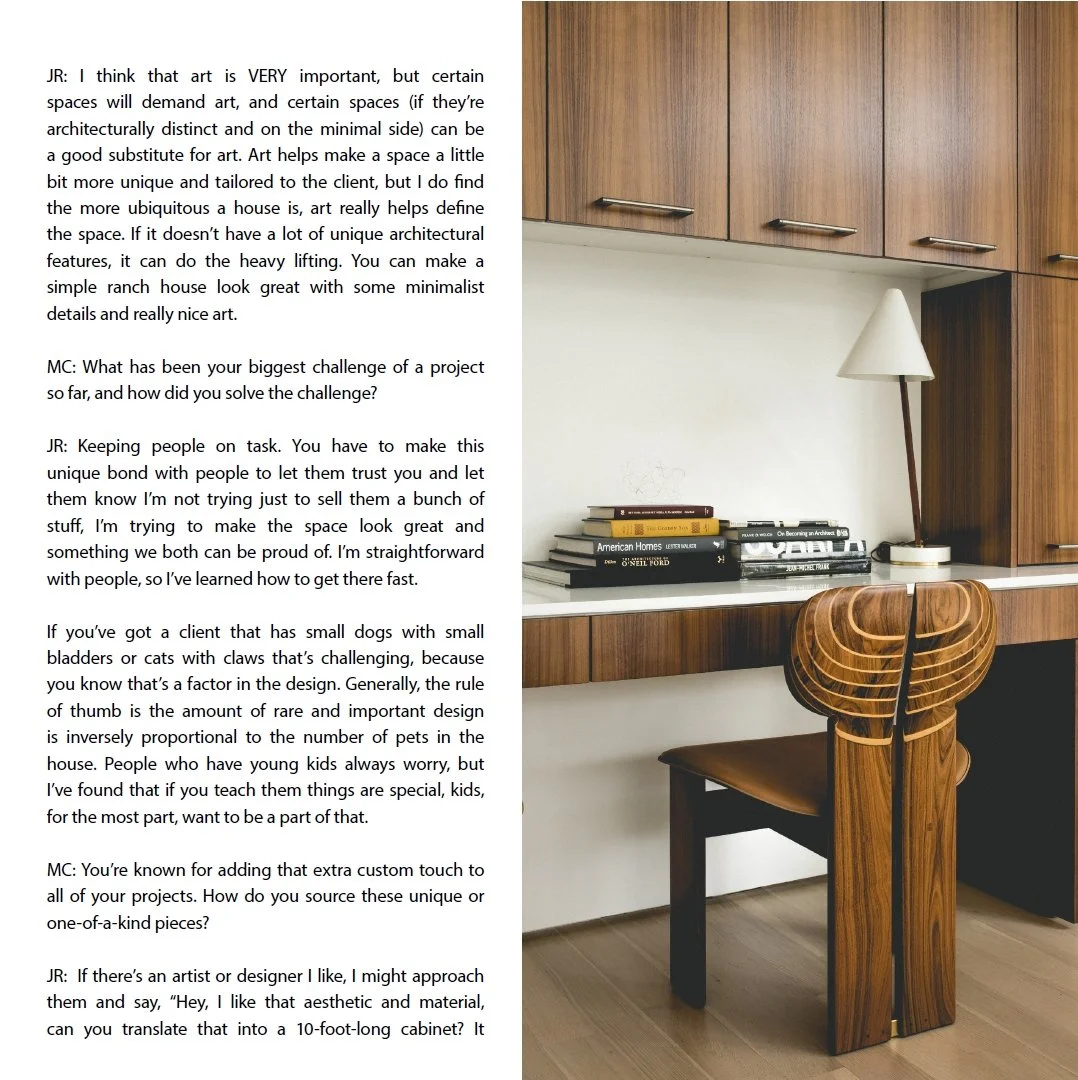
JR: I find myself particularly drawn to the high-design and high-craft furniture of the late '60s and mid to late 70s. Tobia Scarpa, Fabricius and Kastholm, Mario Bellini. Also, mid-70's Belgian design.
MC: You tend to stick to a neutral palette in a lot of your projects. Is this important to you?
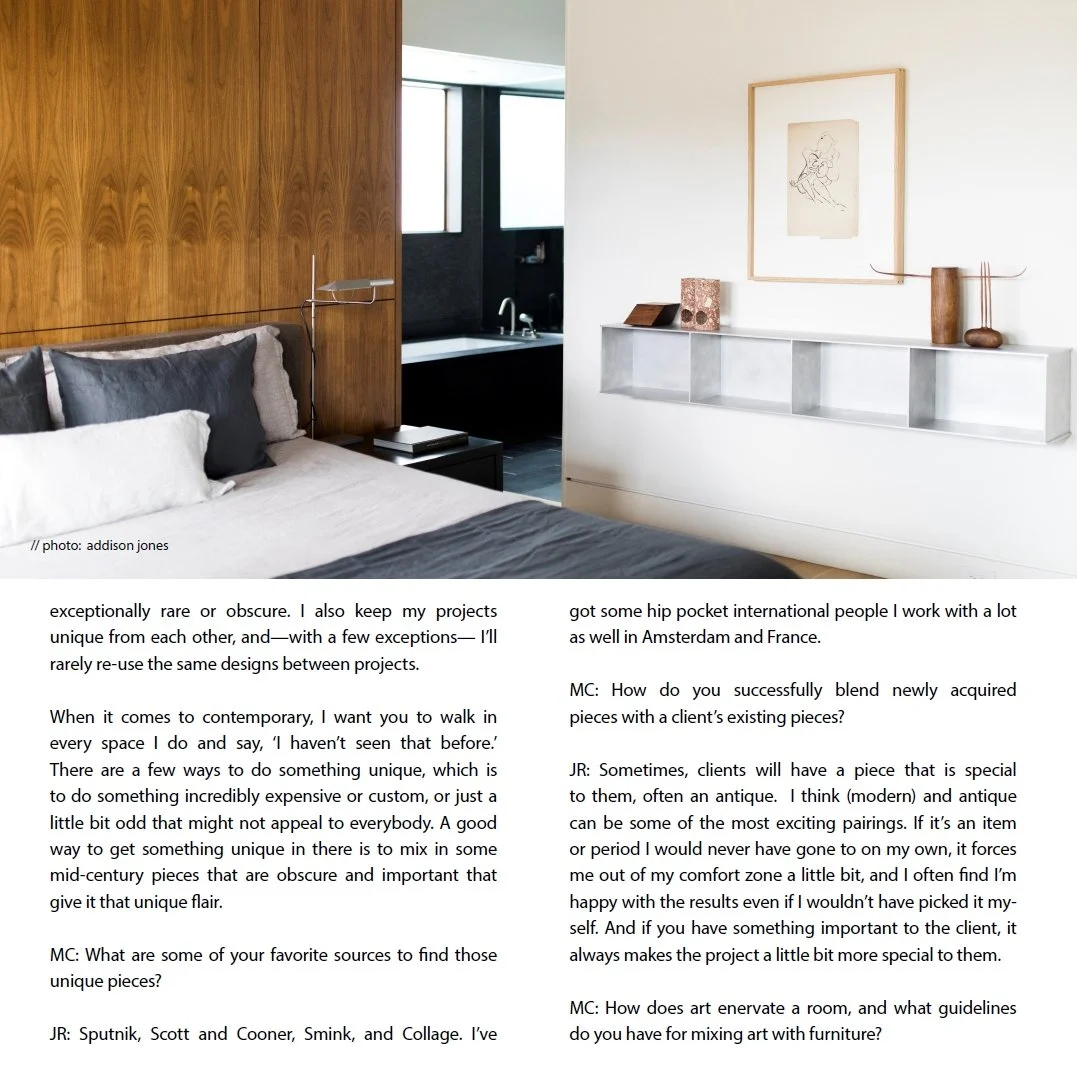
JR: I actually love color, but not bold primary color. There is nothing prettier than a dark, saturated jade green, or the perfect brown/purple balanced aubergine. I even get excited by a muted salmon pink, but I have a very cautious approach to color. I want my projects to be timeless. Color is very subject to trends (millennial pink comes to mind). Just think of the 1970s and try not to think of mustard/brown/orange, or the '80s mauve/ weird Easter-y colors. In my opinion, it is best to keep it neutral and add smaller pops of color. Small pillows and accessories are much easier to get rid of than a large colored sofa.
MC: Why do you love combining modern and contemporary, and do you have any rules of thumb for doing so?
JR: Vintage or mid-century pieces allow me to use something that might be completely unique to a space or project. I am always on the hunt for something exceptionally rare or obscure. I also keep my projects unique from each other, and with a few exceptions-l'll rarely re-use the same designs between projects. When it comes to contemporary, I want you to walk in every space I do and say, 'I haven't seen that before! There are a few ways to do something unique, which is to do something incredibly expensive or custom, or just a little bit odd that might not appeal to everybody. A good way to get something unique in there is to mix in some mid-century pieces that are obscure and important that give it that unique flair.
MC: What are some of your favorite sources to find those unique pieces?
JR: Sputnik, Scott and Cooner, Smink, and Collage. I've got some hip pocket international people I work with a lot as well in Amsterdam and France.
MC: How do you successfully blend newly acquired pieces with a client's existing pieces?
JR: Sometimes, clients will have a piece that is special to them, often an antique. I think (modern) and antique can be some of the most exciting pairings. If it's an item or period I would never have gone to on my own, it forces me out of my comfort zone a little bit, and I often find I'm happy with the results even if I wouldn't have picked it my-self. And if you have something important to the client, it always makes the project a little bit more special to them.
MC: How does art enervate a room, and what guidelines do you have for mixing art with furniture?
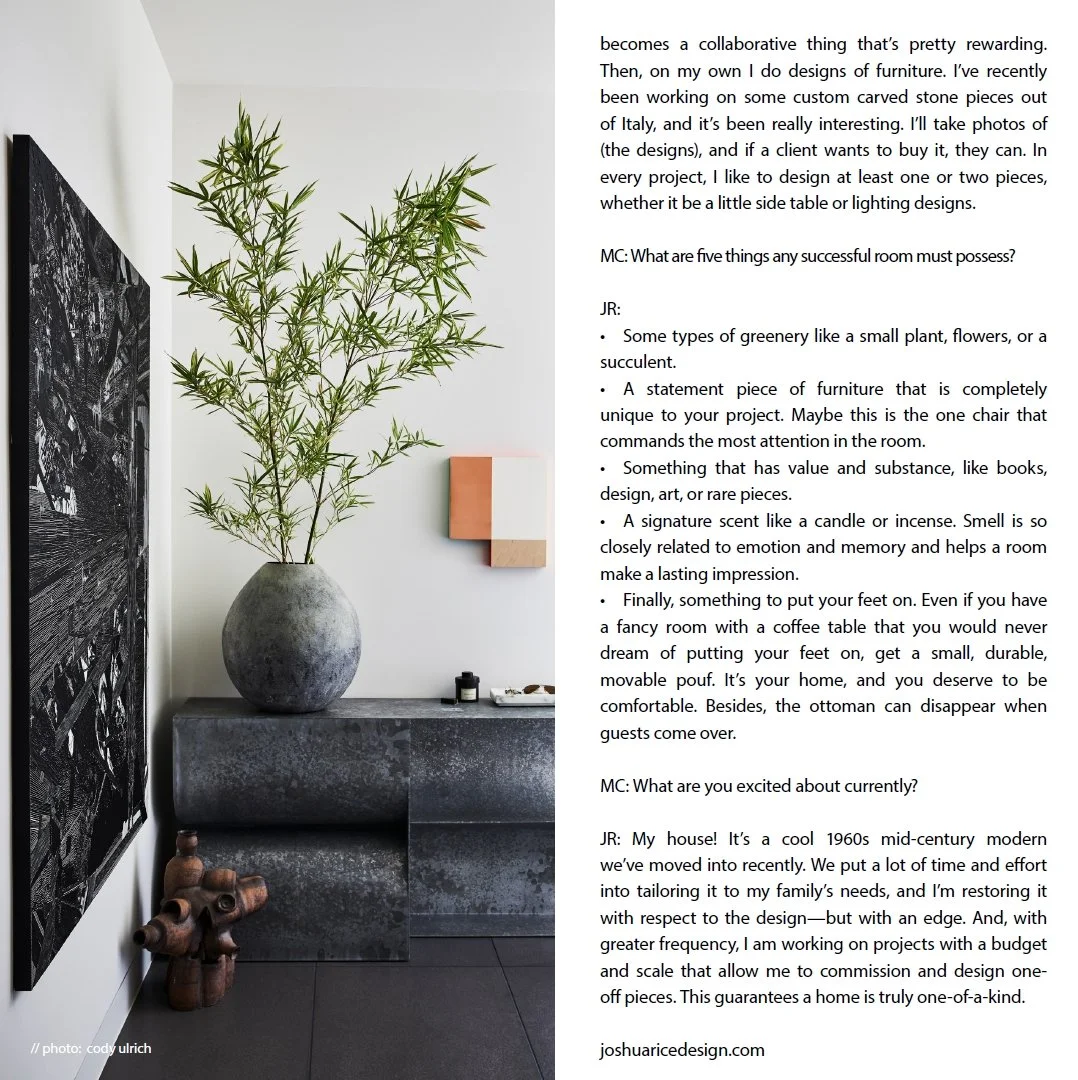
JR: I think that art is VERY important, but certain spaces will demand art, and certain spaces if they're architecturally distinct and on the minimal side) can be a good substitute for art. Art helps make a space a little bit more unique and tailored to the client, but I do find the more ubiquitous a house is, art really helps define the space. If it doesn't have a lot of unique architectural features, it can do the heavy lifting. You can make a simple ranch house look great with some minimalist details and really nice art.
MC: What has been your biggest challenge of a project so far, and how did you solve the challenge?
JR: Keeping people on task. You have to make this unique bond with people to let them trust you and let them know I'm not trying just to sell them a bunch of stuff, I'm trying to make the space look great and something we both can be proud of. I'm straightforward with people, so l've learned how to get there fast. If you've got a client that has small dogs with small bladders or cats with claws that's challenging, because you know that's a factor in the design. Generally, the rule of thumb is the amount of rare and important design is inversely proportional to the number of pets in the house. People who have young kids always worry, but I've found that if you teach them things are special, kids. for the most part, want to be a part of that.
MC: You're known for adding that extra custom touch to all of your projects. How do you source these unique or one-of-a-kind pieces?
JR: If there's an artist or designer I like, I might approach them and sav. "Hey, I like that aesthetic and material. can you translate that into a 10-foot-long cabinet? It becomes a collaborative thing that's pretty rewarding. Then, on my own I do designs of furniture. I've recently been working on some custom carved stone pieces out of Italy, and it's been really interesting. I'll take photos of (the designs), and if a client wants to buy it, they can. In every project, I like to design at least one or two pieces, whether it be a little side table or lighting designs.
MC: What are five things any successful room must possess?
JR: 1) Some types of greenery like a small plant, flowers, or a succulent. 2) A statement piece of furniture that is completely unique to your project. Maybe this is the one chair that commands the most attention in the room. 3) Something that has value and substance, like books, design, art, or rare pieces. 4) A signature scent like a candle or incense. Smell is so closely related to emotion and memory and helps a room make a lasting impression. 5) Finally, something to put your feet on. Even if you have a fancy room with a coffee table that you would never dream of putting your feet on, get a small, durable, movable pouf. It's your home, and you deserve to be comfortable. Besides, the ottoman can disappear when guests come over.
MC: What are you excited about currently?
JR: My house! It's a cool 1960s mid-century modern we've moved into recently. We put a lot of time and effort into tailoring it to my family's needs, and I'm restoring it with respect to the design-but with an edge. And, with greater frequency, I am working on projects with a budget and scale that allow me to commission and design one-off pieces. This guarantees a home is truly one-of-a-kind.
Photography: Miscellaneous